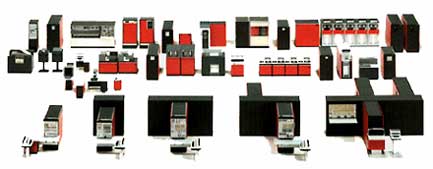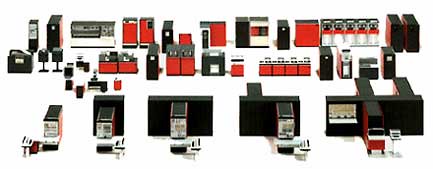
An early promotional photo showing, across the bottom, the then models 30, 40, 50, 60 and 70 processors
For the second part of my anniversary series for the System/360, I want to introduce the members of the computing family; the processors that made up the backbone of the series. In previous years, these would have been completely separate devices or even series, but with System 360 all of these processors had a single unifying theme, or architecture. I'll start off with those that were announced in 1964 and finish with the models that were introduced later.
A quick note about IBM part numbers in this era:
Most every processor at this point had some kind of 4-digit number to designate it, such as 7090, 1401, 1620. Upgrades would be in a similar range; 7094, 1440. And lastly, peripherals would be interspersed according to what line they were offered with; 1403, 1402, 7330. With a whole new series like 360, the "series code" was 2000 and the processors were the base-most elements; model 30=2030 and so on. Other peripherals were given different different prefixes, such as 24XX contained all the tape drives, 25XX was card handling, etc. It was a good way of keeping track of things, but they didn't always stick to it anyway. Just something to keep in mind when reading further.
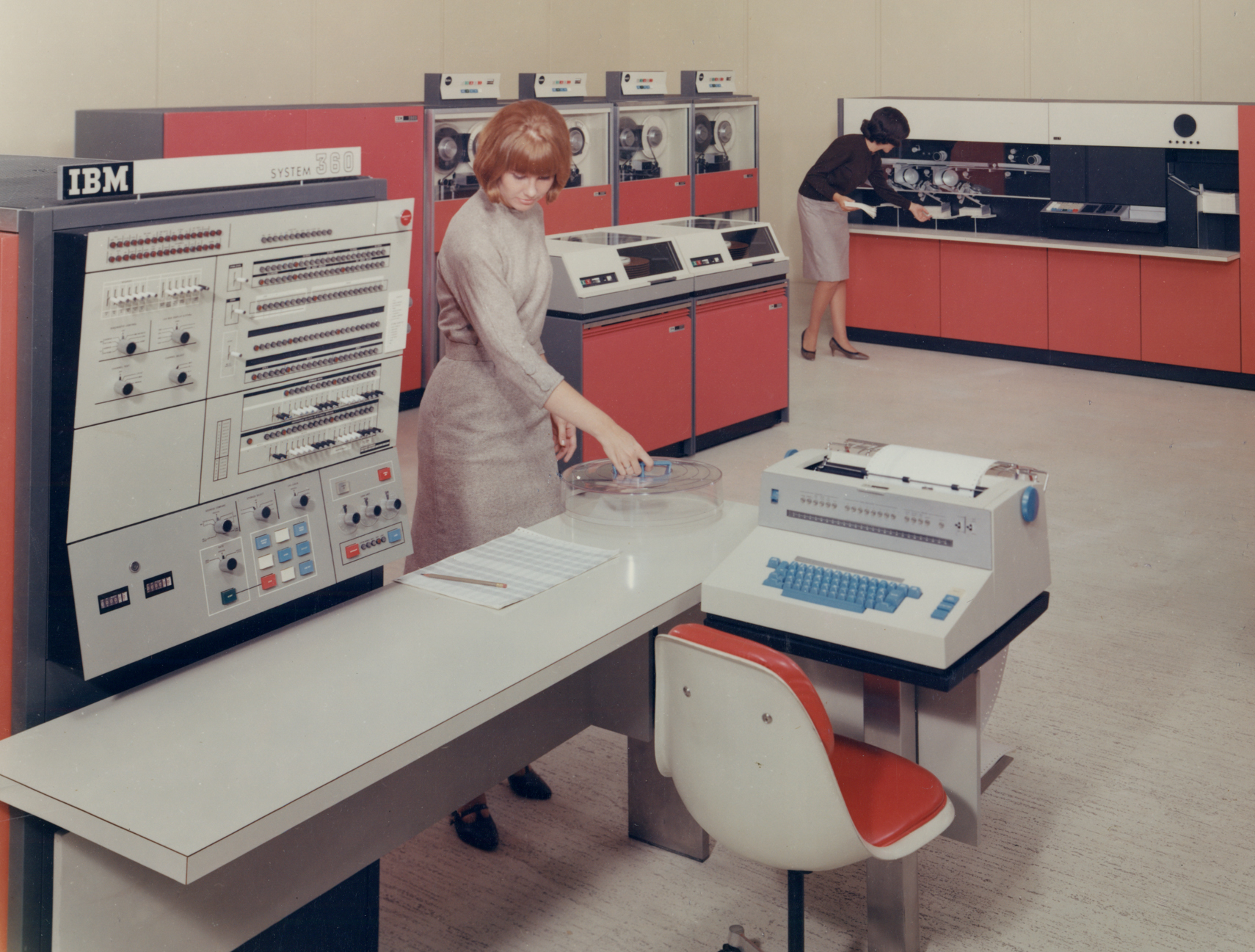
The Model 30
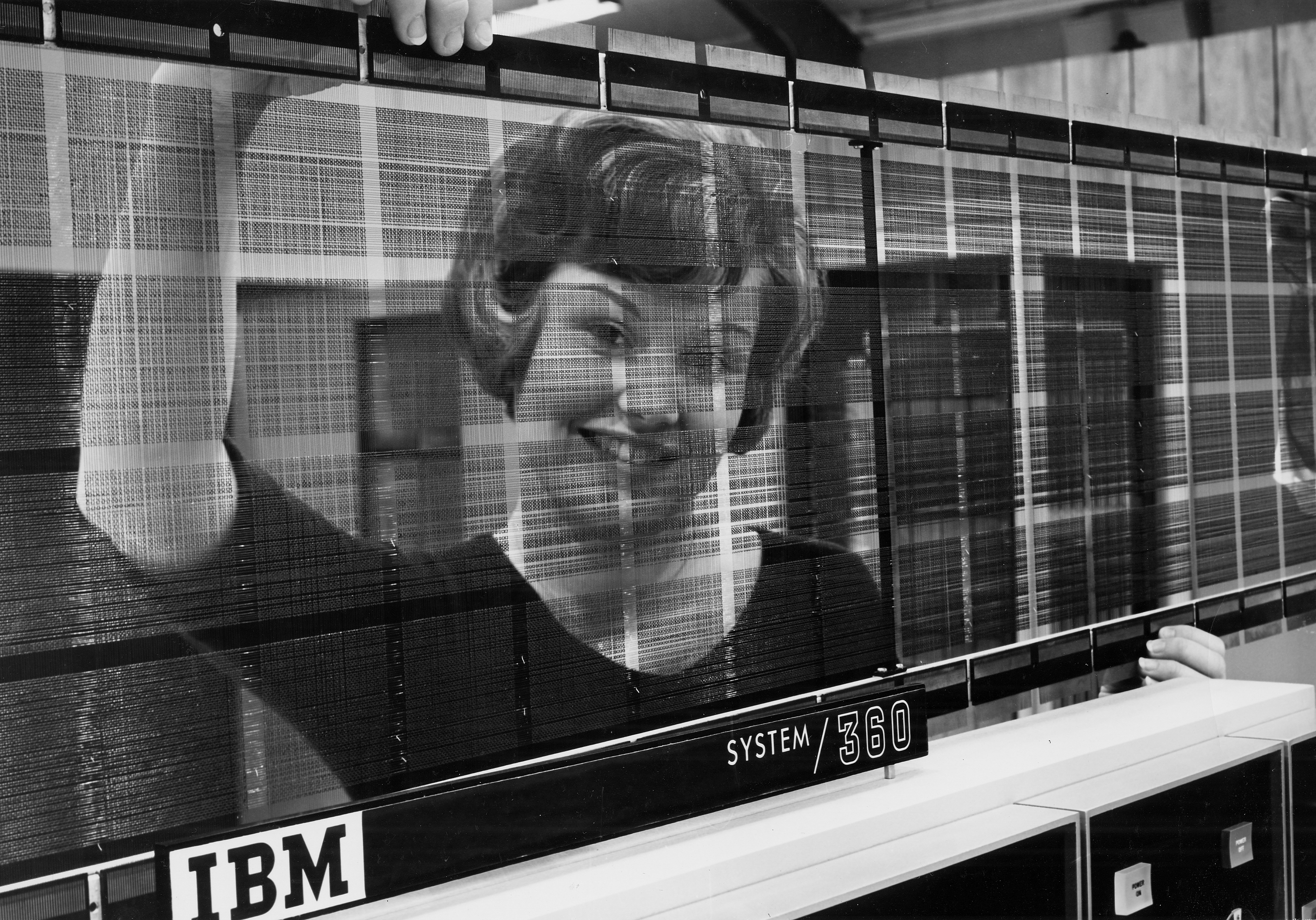
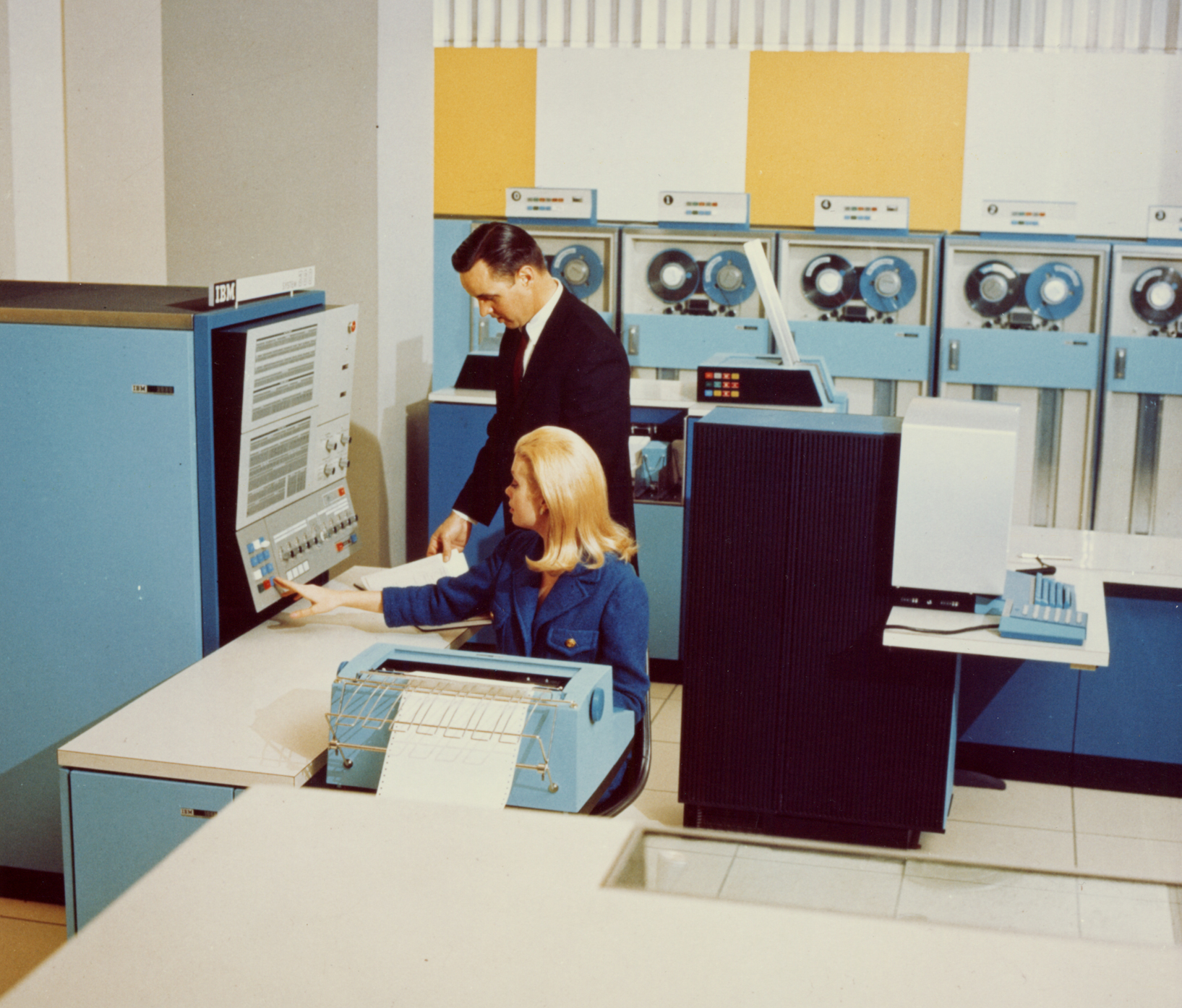
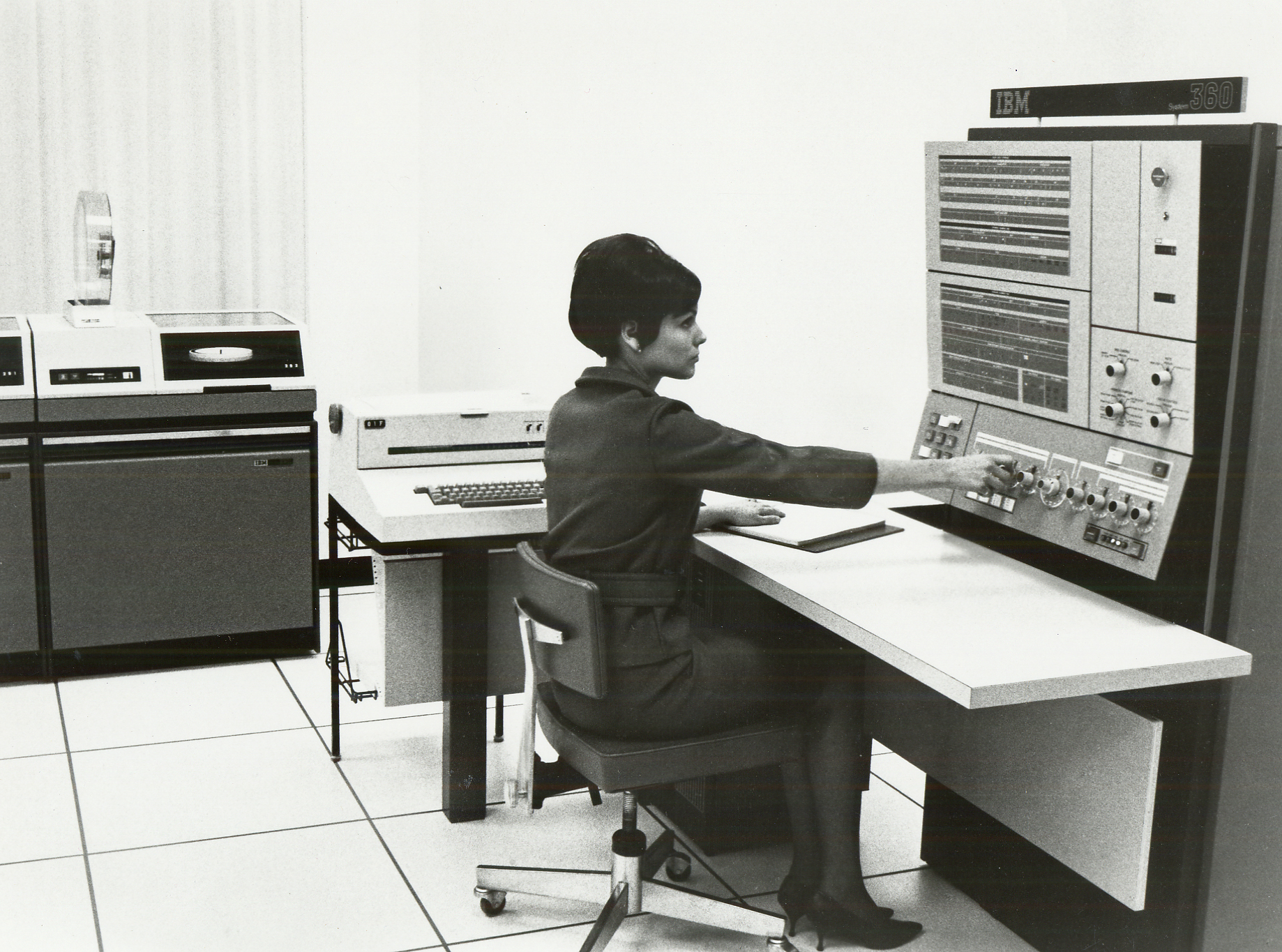
The IBM 2030 in IBM series code, or model 30, was the initial baby of the system. It was the lowest performance machine and looked quite unlike many of the other computers with its bank of knobs for data entry and backlit lucite indicator panel. It is my favorite, partly because of these features. This model was aimed more at the commercial industries for payroll and related tasks. All the computers in the series are 32 bit, but the model 30 has only an 8-bit path to memory, requiring 4 memory cycles to read or write a word to memory. One of the methods that IBM used to keep the lower-cost models cheap was to implement microcode, a read only storage that interprets the instructions to internal signalling, rather than using dedicated circuitry. This was slower, but also cheaper and smaller. The model 30 was the only model to use what was called Card Capacitor Read Only Storage, or CCROS. CCROS was unique because the data contained in it was encoded in Mylar punched cards that had metal patterns printed on them. This allowed the computer to be easily modified if so desired, but was a massive headache to get working. People who switched from an earlier 1401 system often complained that the System/360 was more unreliable than the 1401, most likely due to early issues with this device.
The Model 40
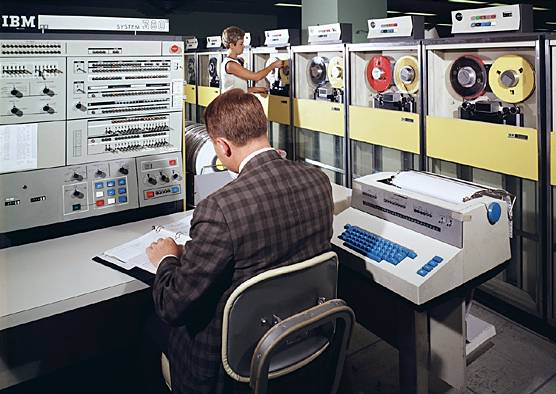
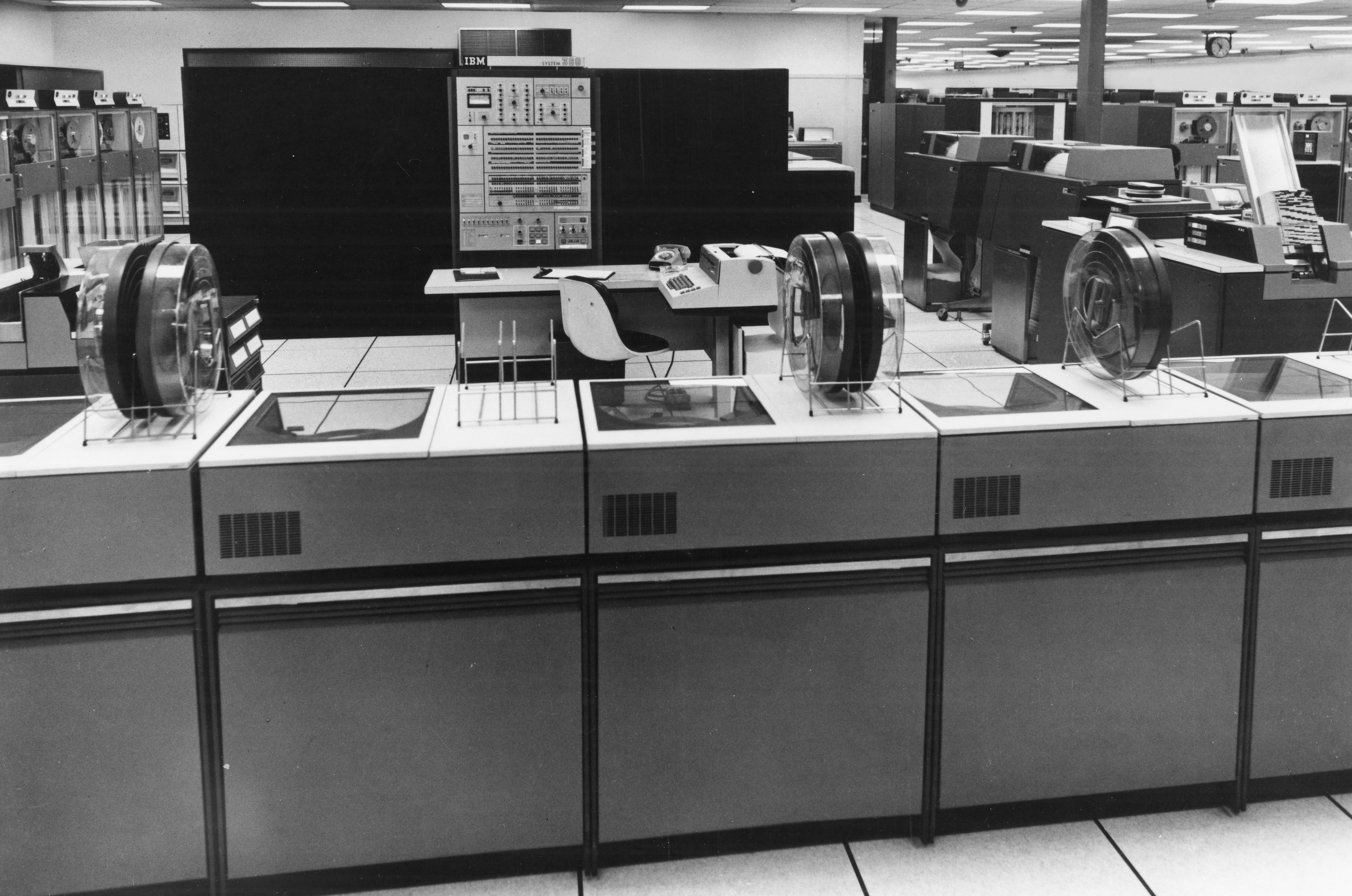
The IBM 2040 was the next step up, with a faster microcode and a wider, 16-bit path to memory, but with an 8-bit arithmetic unit. It was also the first model in the series to use Transformer Read Only Storage, or TROS, for microcode. TROS was similar to "rope" memory in that bits were encoded by whether or not a drive wire passed through a sensing ring. It was faster and more reliable than CCROS. The Model 40 also incorporated some innovations on its front panel that were present on higher-end models. It used individual, front mounted lamps and had a unique way of multiplexing bays of lamps for busses and having the individual bits labelled properly. A knob on the side of the panel would rotate a bank of labels behind a small window that would also operate a switch, changing the readout on the lamps. This model was the most popular, showing up in many universities and businesses.

The Model 50
The IBM 2050 was the first in a series of computers to replace what was considered to be the scientific processing line at IBM, the 7000 series. Unlike the model 30 and 40 it had a 32-bit arithmetic unit and a microcode based on a balanced capacitor store, similar but more reliable than CCROS.
The Model 60 (actually the Model 65)
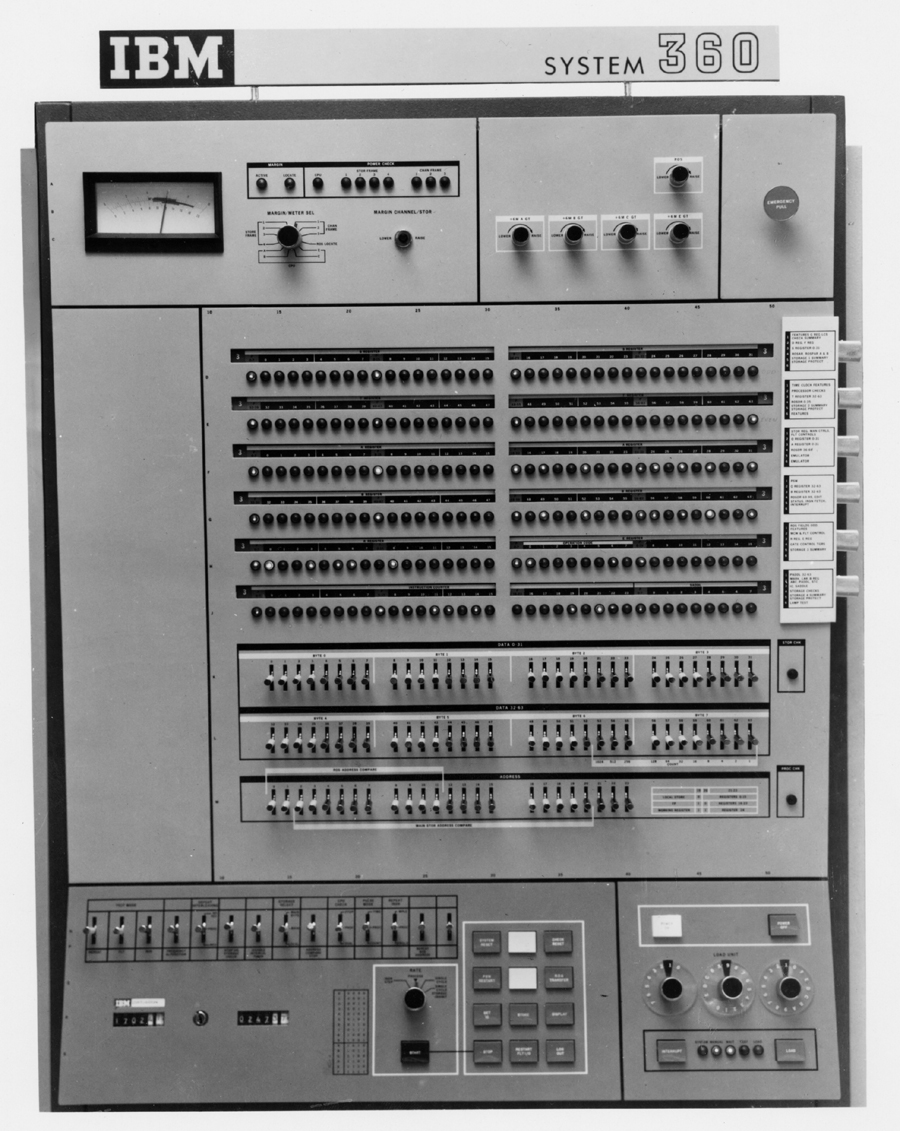
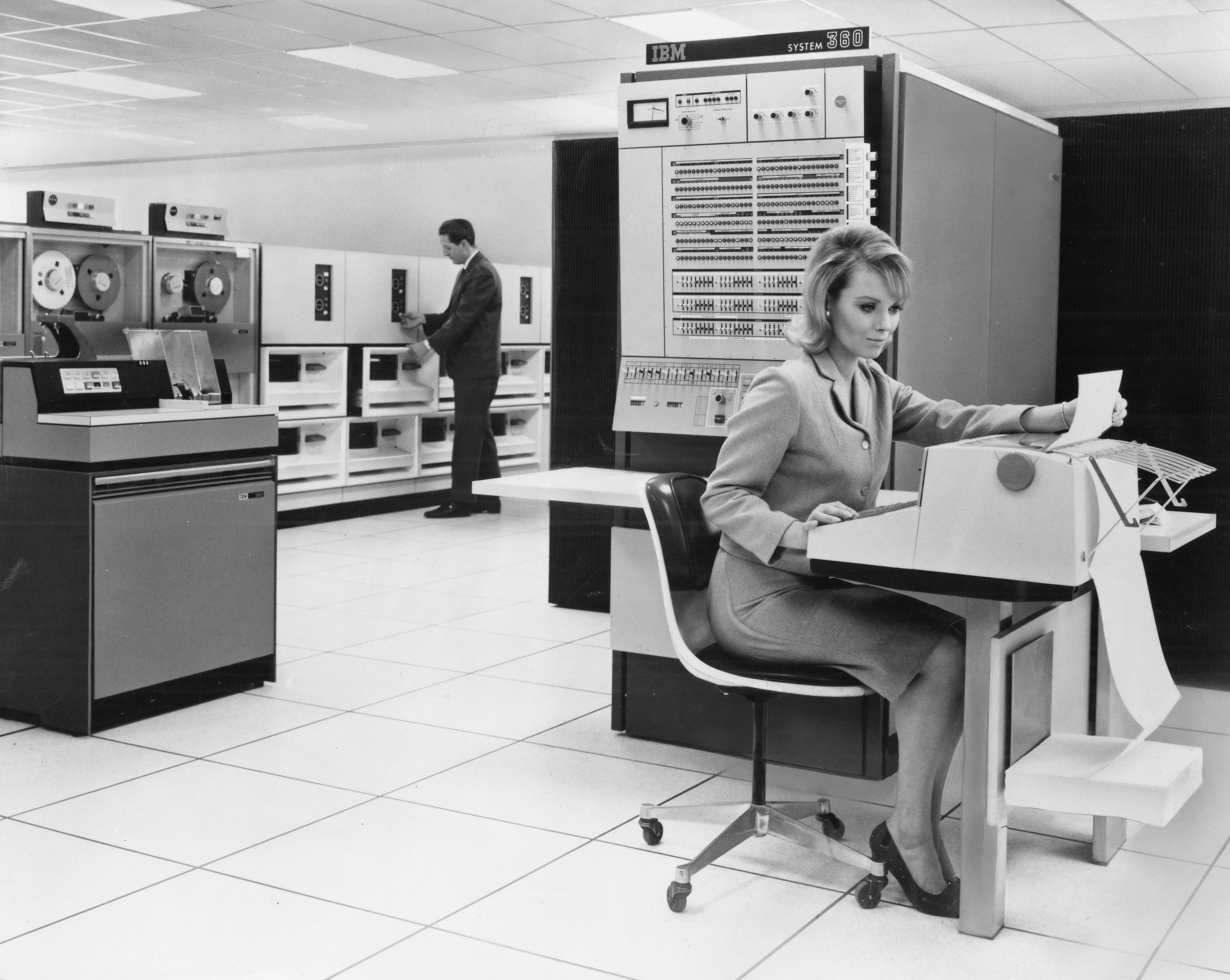
The IBM 2065 was a real workhorse. It used the same microcode as the model 50, but had a 60 bit wide arithmetic unit with an auxiliary 8 bit unit for floating point operations. It also stored its registers in flip flops rather than some variant of core memory, which made it blazing fast (at least comparatively). It also used a different, faster type of main memory.
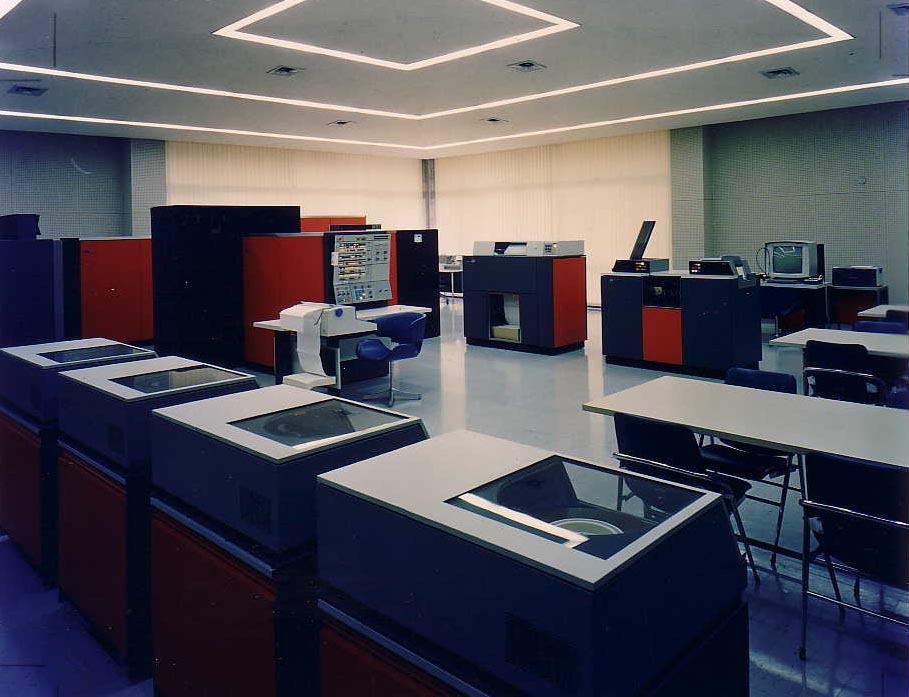
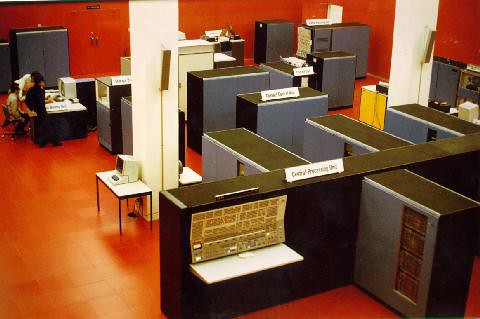
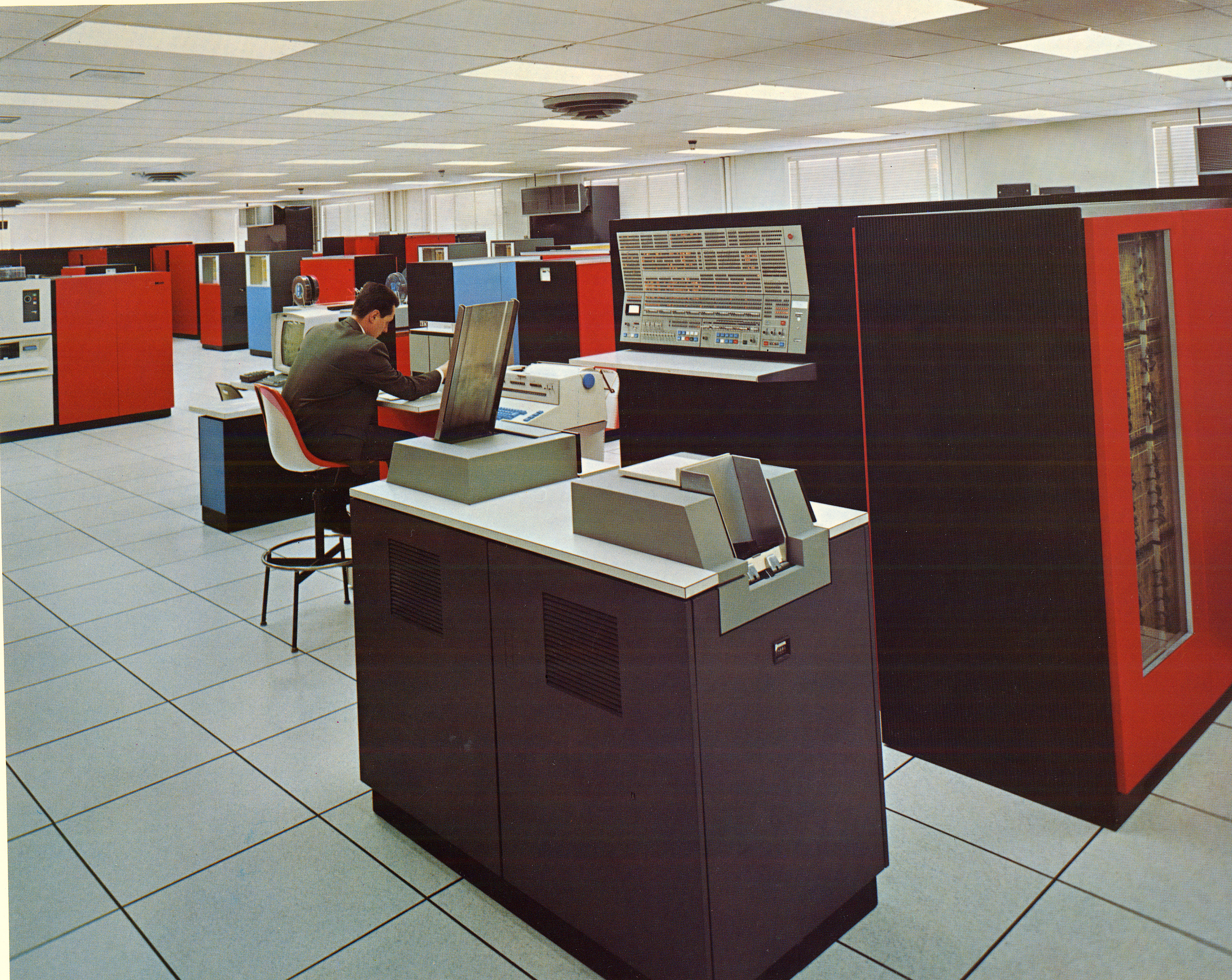
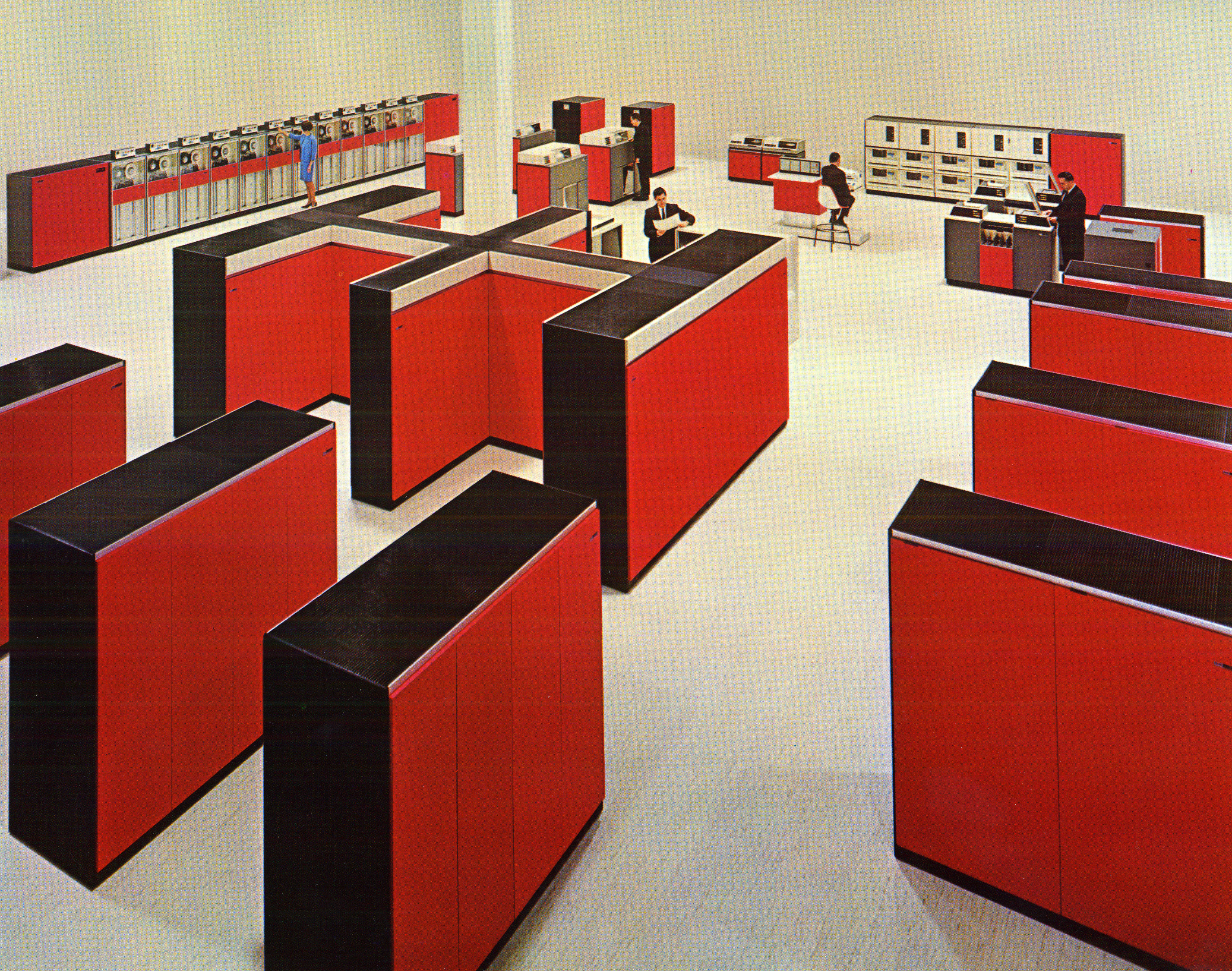
By this time, the computers are actually getting quite large. The model 30 and 40 pretty much had the same size case (about two refrigerators worth) But as can be seen from the image at the top of the page, the higher models started having compartments jutting out in all directions to house the increasing circuitry (in production the model 40 did not have the rear compartment it has in the image). The cabinets were even taller than those of the first two models. And to think that the computers still needed an additional module or two to talk to peripherals... no wonder people wanted to free up floor space when they were decommissioned.
The Model 70 (actually the Model 75)
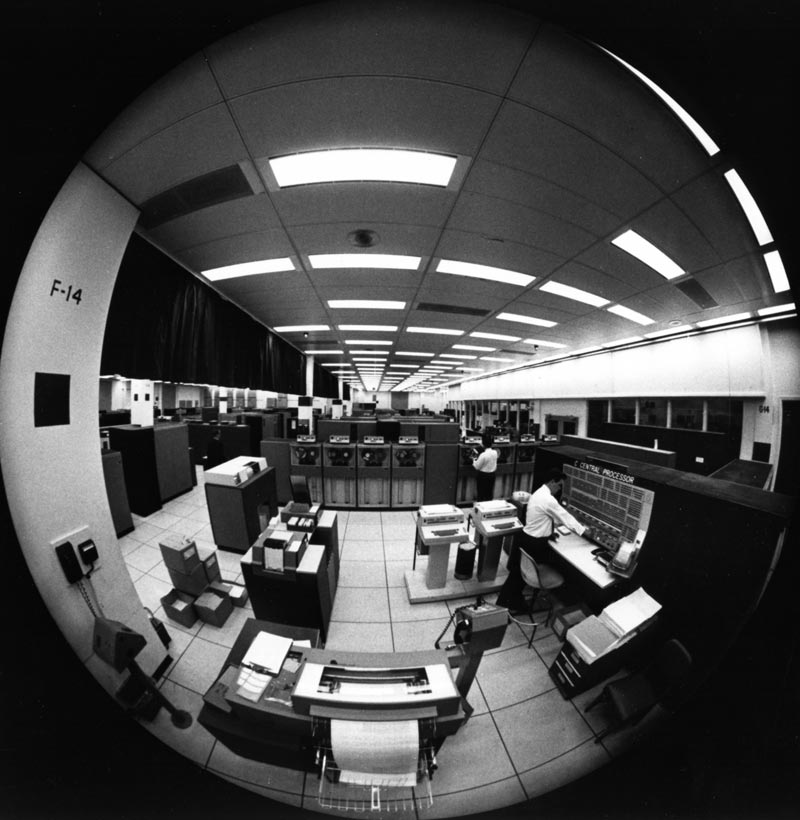
The IBM 2075 is actually quite an important computer. It was the only computer of the original line-up to not use microcode, but faster hard-wired logic. Other than that factor, it is essentially a beefed-up model 65. What makes this an important computer is that it had a higher addressable memory space and was essentially the supercomputer of the series at the time it was released. But overall, it is important because it was a cluster of five of these computers at NASA's Real Time Computing Center that ran all of the Apollo missions. This is my second favorite computer of the series.
Later Releases

Models 20, 22 and 25
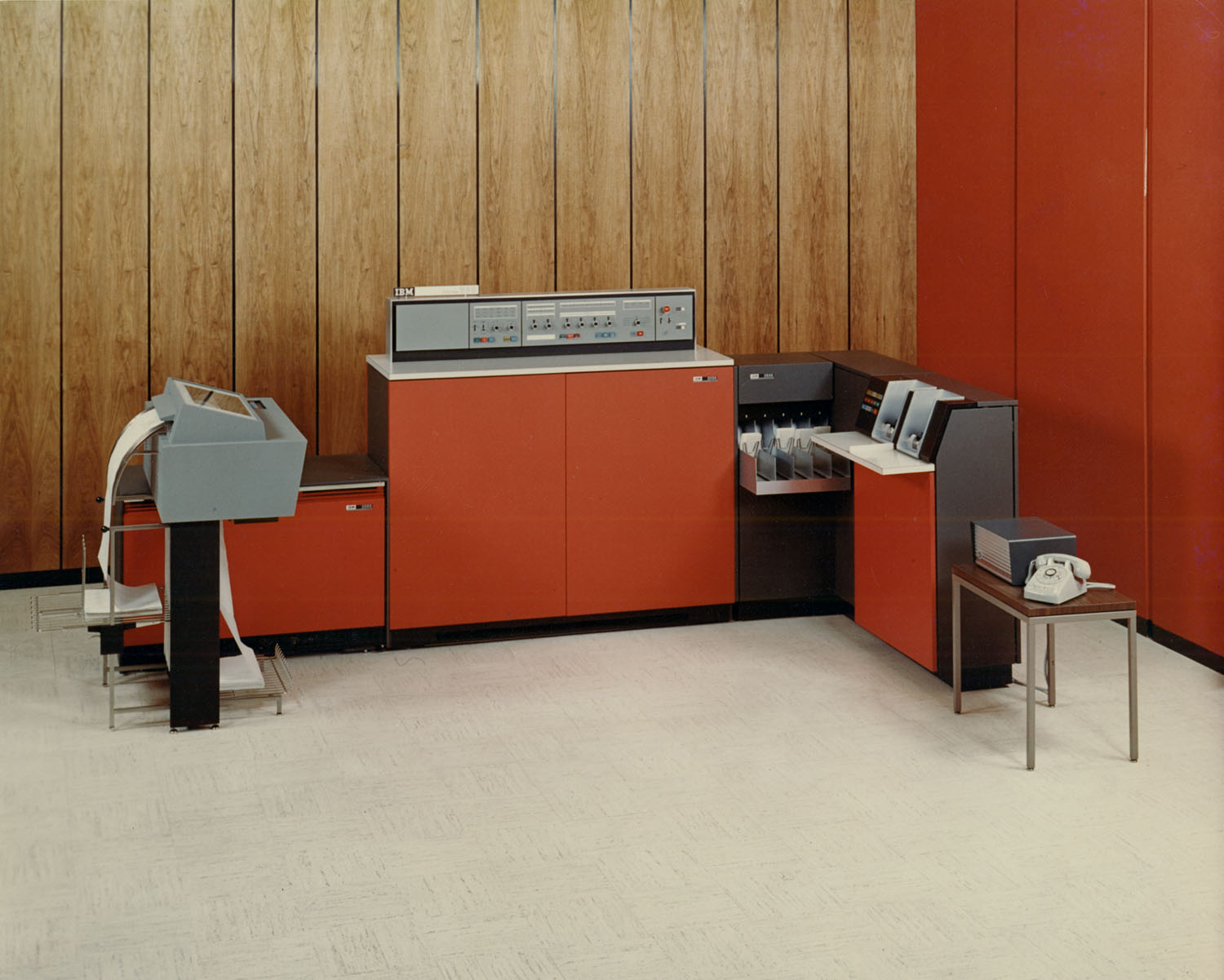
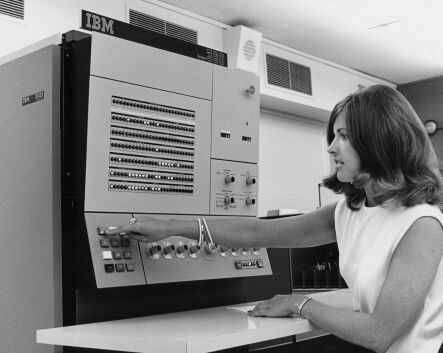
These models were later add-ons to the low end to replace unit-record (card processing) equipment. The model 20 was designed in Europe and was not entirely compatible with the larger systems. The models 22 and 25 were small systems that resembled the model 30 and (I think) used TROS for microcode.
The Model 85
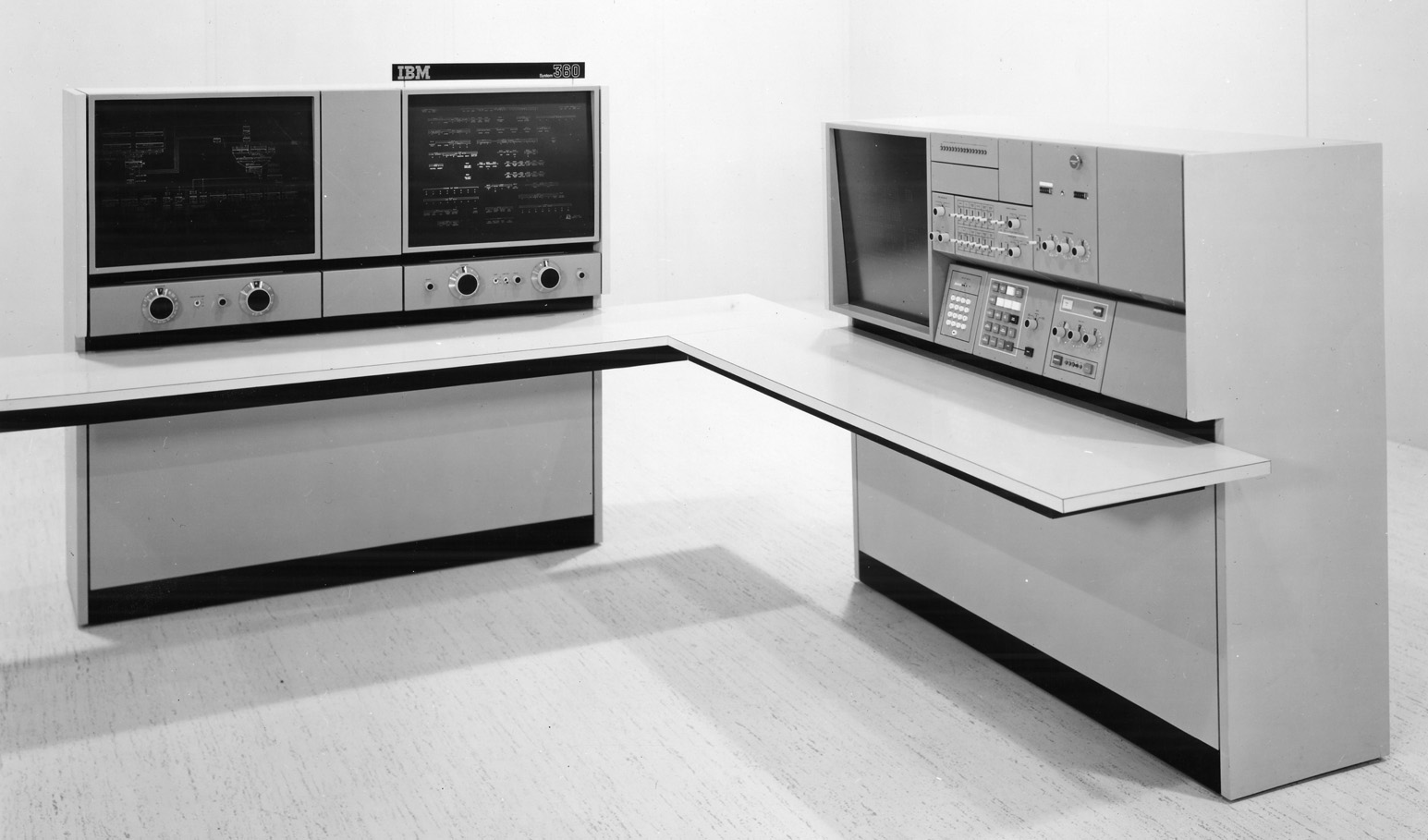
The model 85 was a very unique computer. It did not have a front panel like the other models of the series. Not only was the panel sitting on its own as a desk, but it had a video screen that went along with it. There are very few lights on the front panel, because it was accompanied by a twin microfilm module that provided document reference and also data readout, using the microfilm as a mask and labels. It was hardwired and used a fast thin-film memory for a lower portion of memory. It wasn't very popular and not many were made. It's hard to even find good pictures of it.
The Model 44
The model 44 was essentially a model 40, but with hardwired logic and circuitry for real-time applications. It was intended for scientific purposes but was not very popular.

Models 91, 95 and 195
These models were the last of the 360 series. They were the highest performance, with special high-speed memories and all hardwired logic. The 95 was a 91 with thin film memory and only two were ever made, both for NASA. The model 195 was almost a System/370 and a model made with 370 circuitry was available as part of that line.