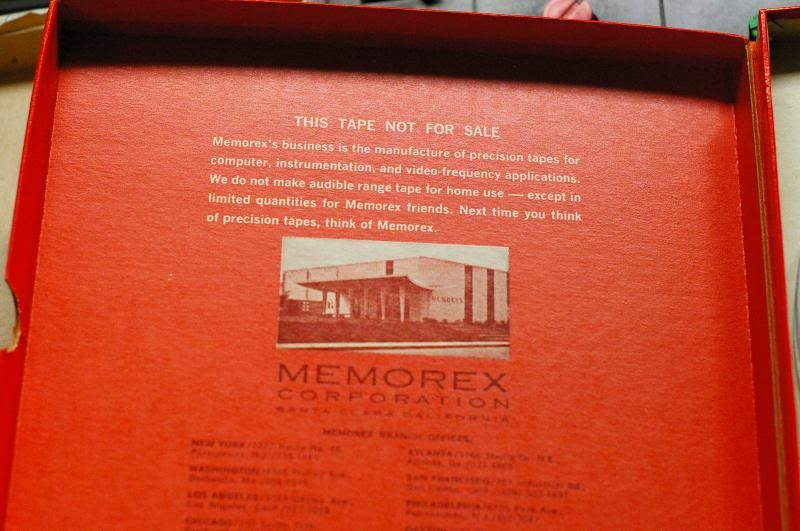
Now that my order has come through for these tapes, I decided to try and test them out. It's a pretty quick and dirty test, but I thought I would take a look at their frequency response when used with my 4-track recorder. I setup a logarithmic sweep in audacity at a constant level and recorded it to the tape at the recorder's 0dB level. The results are actually quite revealing, but reassuring.
The first test was also run to test something else that I did out of ignorance a good few years back. When I first got a 4-track deck, it was a Tascam 244 that I couldn't find the manual for, but didn't really need because it's a fairly straight-forward machine. But, It wasn't until I got the Fostex and the manual for it that I realized I should be using high-bias tapes with both of them. I did a recording with a friend using the prior deck and a standard-bias tape, and it seemed to come out alright, so I wanted to know what was going on with that type of operation. The first chart you will see below is of a Trutone high bias tape and then a Maxell standard bias tape, both made using the Fostex deck.
I should take a minute to say that I am using a Fostex Model 280 4-track Recorder playing in and out of my stock desktop sound card. The audio goes in through the aux return (because it was easy) and out through the stereo outputs. The recorder is a double-speed device running at 3 3/4 inches per second rather than the standard 1 5/8. To simplify the charts, only the top side of one channel is shown.
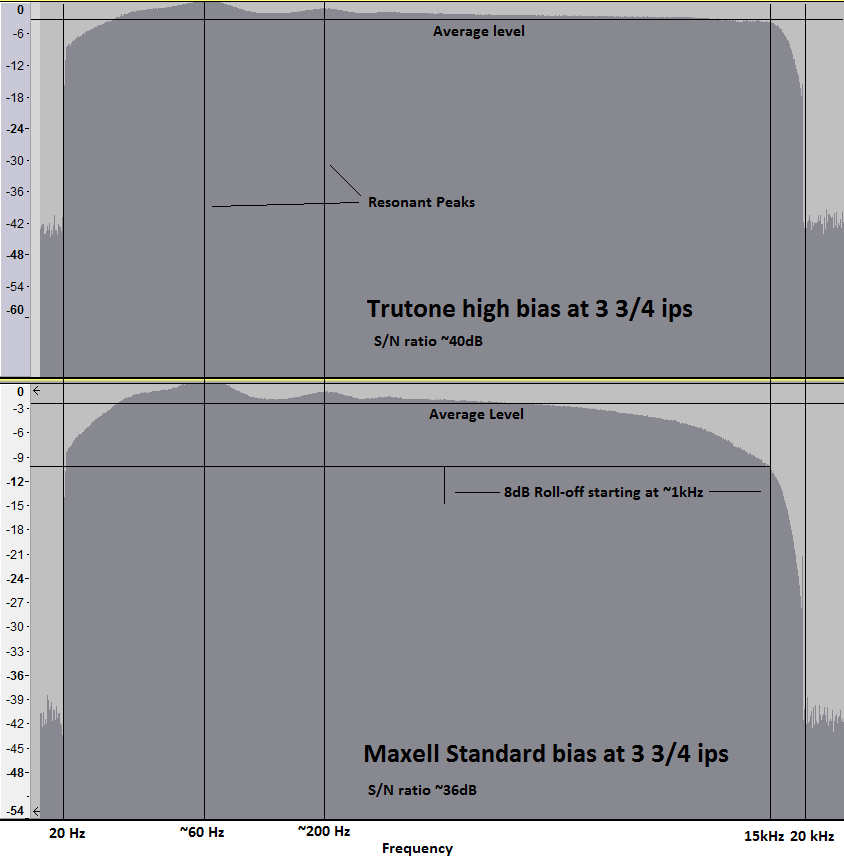
High and low bias tape response curves. Output levels in dB.
I was quite delighted to see that, aside from a few resonant peaks in the low midrange, the Trutone tape is relatively flat up to about 15kHz. That's pretty respectable for a cassette tape. A signal to noise ratio of about 40dB was not too much fun, but again, it's a cassette tape...
The interesting things start to happen when you look at the standard bias cassette being recorded with high bias. The signal to noise ratio goes down slightly, but the roll-off is what I noticed right away. At about 1kHz it starts rolling off and by 15kHz, where the high bias tape pretty much drops out, it's lost about 8dB. That's pretty significant. But ultimately, it's not that bad, and does a bit to give that vintage cassette sound without completely ruining the sound of whatever you're recording. Cymbals, synths and echo clarity are probably the most affected by this.
What's interesting is what happens when you do a test the wrong way and end up feeling discouraged at first and then realizing you have more to feel good about. That's what happened when I first tried the test using my JVC KD-V100 cassette deck. It's just a standard deck running at 1 5/8 inches per second, but has switches to change the bias level for different types of tape. It has Dolby noise reduction, which I left off. The chart that I generated from that really expresses why tape speed is important to the frequency response of a recording. This was the first chart that I created and it was quite discouraging until I realized that it is not representative of how I am going to be using these cassettes.
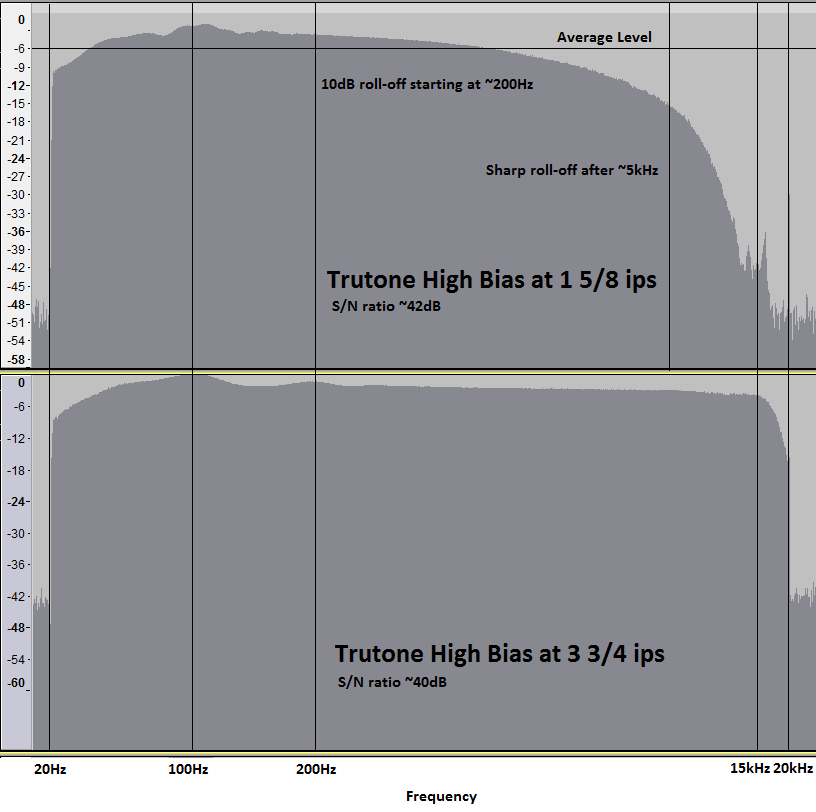
The response curve for this thing is terrible! The resonance peaks in the other curves are barely recognizable, except that ~60Hz seems to be the peak of the whole curve. The roll-off in this case starts at about 200Hz and loses 10dB of signal until it falls off the deep end at 5kHz. And this is a high bias tape! OK, it's not that bad, and you could compensate for it, but you do get into issues with the signal to noise ratio, even though it is better in this case (which I think has more to do with the deck than the tape speed).
In the end, I would have to say that for double-speed tape recorders, Trutone tape shows no issues, standard bias tape is OK if you don't mind a little roll-off and if you want to record at standard speed, only do it if you like horror movies.